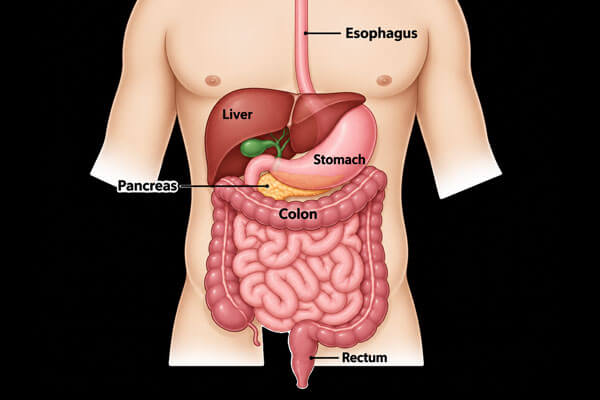
Gastrointestinal and liver cancers can involve complex organs and may require specialised evaluation and treatment. A cancer diagnosis can be challenging for patients and their families, making timely assessment and clear guidance important parts of the treatment journey.
Dr. Aditya Reelkar is a Surgical Oncologist in Mumbai providing surgical care for patients with gastrointestinal and liver cancers. His approach focuses on understanding each patient's diagnosis, assessing the extent of the disease, and planning treatment according to individual clinical needs.
Gastrointestinal cancers can affect different parts of the digestive system, including the stomach, small intestine, colon, rectum, and other associated organs. Liver cancer develops within the liver and can have different causes and characteristics.
Symptoms vary depending on the affected organ and may include persistent abdominal discomfort, unexplained weight loss, changes in appetite, digestive problems, jaundice, changes in bowel habits, or other unusual symptoms. Persistent symptoms should be evaluated by an appropriate medical professional.
Surgery may form an important part of treatment for selected patients with gastrointestinal or liver cancer. Depending on the location and extent of the tumour, surgery may involve removing the affected section of an organ along with nearby tissues or lymph nodes when required.
The recommended surgical approach depends on factors such as the type and stage of cancer, tumour location, involvement of nearby structures, and the patient's overall health.
Complex GI and liver cancer surgery requires detailed preoperative assessment. Imaging studies, biopsy reports, blood tests, and other investigations may be reviewed to understand the extent of the disease and plan the procedure appropriately.
The surgical plan is tailored to the patient's condition, with attention to cancer control and the preservation of important structures and functions wherever medically appropriate.
Cancer treatment is different for every patient. Treatment planning may consider the cancer type and stage, tumour characteristics, the presence of disease elsewhere, previous treatments, and the patient's overall health.
Depending on the diagnosis, treatment may include surgery along with chemotherapy, radiation therapy, targeted therapy, immunotherapy, or other specialised treatments. The appropriate combination is determined according to the individual clinical situation.
For selected patients and procedures, minimally invasive techniques such as laparoscopic surgery may be considered. These approaches use smaller incisions and specialised instruments to perform surgery.
Whether minimally invasive surgery is suitable depends on the type, location, and extent of the cancer, as well as other individual clinical factors. In certain complex cases, open surgery may be more appropriate.
GI and liver cancer treatment often requires collaboration between multiple specialists. A surgical oncologist may work with medical oncologists, radiation oncologists, gastroenterologists, radiologists, pathologists, and other healthcare professionals.
This multidisciplinary approach helps coordinate investigations and treatments while considering the patient's overall cancer care needs.
Recovery following cancer surgery depends on the type and extent of the procedure and the patient's general health. Follow-up consultations help monitor healing, review pathology findings, and determine whether additional treatment or surveillance is required.
If you or a family member has been diagnosed with a gastrointestinal or liver cancer, a consultation with a surgical oncologist can help you understand the diagnosis, available treatment options, and the next steps in your individual care journey.
© 2026 | Dr Aditya Reelkar