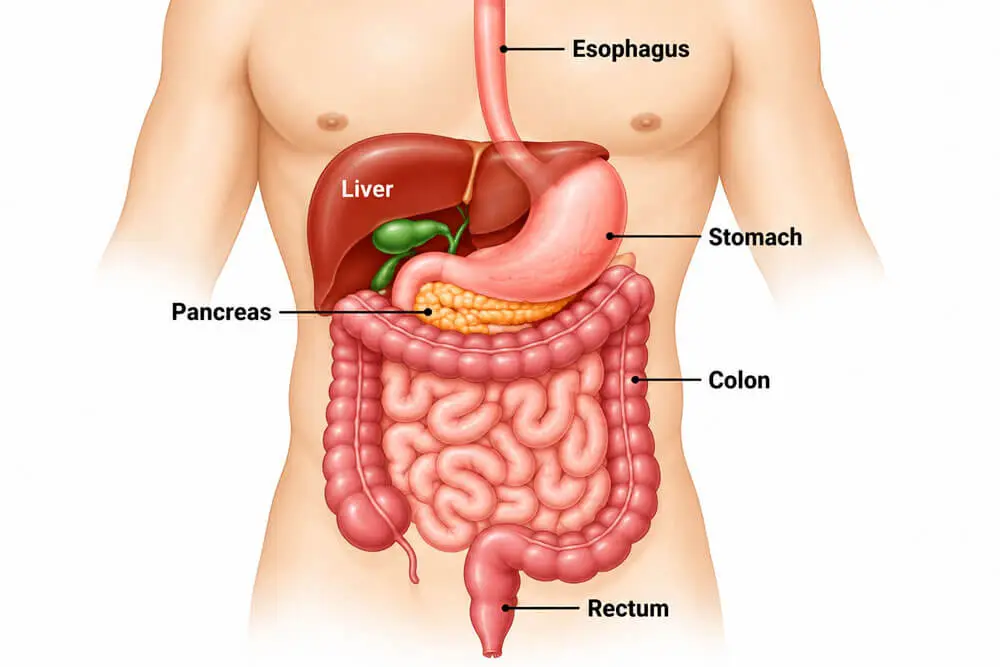
Gastrointestinal cancers can affect different parts of the digestive system, including the stomach, small intestine, colon, rectum, and other digestive organs. Specialised evaluation and appropriate treatment planning are important for managing these complex conditions.
Dr. Aditya Reelkar is a Surgical Oncologist providing surgical care for patients with gastrointestinal cancers. Treatment is planned according to the type, location, stage, and extent of the disease, along with the patient's overall health.
Gastrointestinal cancer refers to cancers that develop within the digestive system. These may include cancers of the stomach, small intestine, colon, rectum, and other associated structures. Symptoms can vary depending on the organ involved and the stage of the disease.
Persistent abdominal discomfort, changes in bowel habits, difficulty swallowing, unexplained weight loss, blood in the stool, loss of appetite, or other unusual digestive symptoms should be evaluated by an appropriate medical professional.
Surgery may be an important part of treatment for selected patients with gastrointestinal cancer. Depending on the location and extent of the tumour, surgery may involve removing the affected portion of the digestive tract along with nearby tissues or lymph nodes when required.
The type of surgery depends on the cancer location, stage, involvement of surrounding structures, and the patient's overall medical condition.
For selected patients, laparoscopic or other minimally invasive techniques may be considered. These procedures use smaller incisions and specialised instruments to perform surgery.
The suitability of minimally invasive surgery depends on the type, location, and extent of the cancer, as well as other individual clinical factors. In certain complex cases, open surgery may be more appropriate.
Every patient's cancer is different. Treatment planning may involve surgery along with chemotherapy, radiation therapy, targeted therapy, immunotherapy, or other treatments depending on the diagnosis and stage of disease.
Gastrointestinal cancer treatment may involve a team of specialists, including surgical oncologists, medical oncologists, radiation oncologists, gastroenterologists, radiologists, and pathologists.
Coordinated care allows different specialists to assess the condition and plan the appropriate sequence of investigations and treatments.
Recovery depends on the type and extent of surgery and the patient's overall health. Follow-up consultations help monitor healing, review pathology results, and determine whether additional treatment or surveillance is required.
If you have been diagnosed with gastrointestinal cancer or have been advised to undergo surgical evaluation, a consultation with a surgical oncologist can help you understand your condition and available treatment options.
© 2026 | Dr Aditya Reelkar